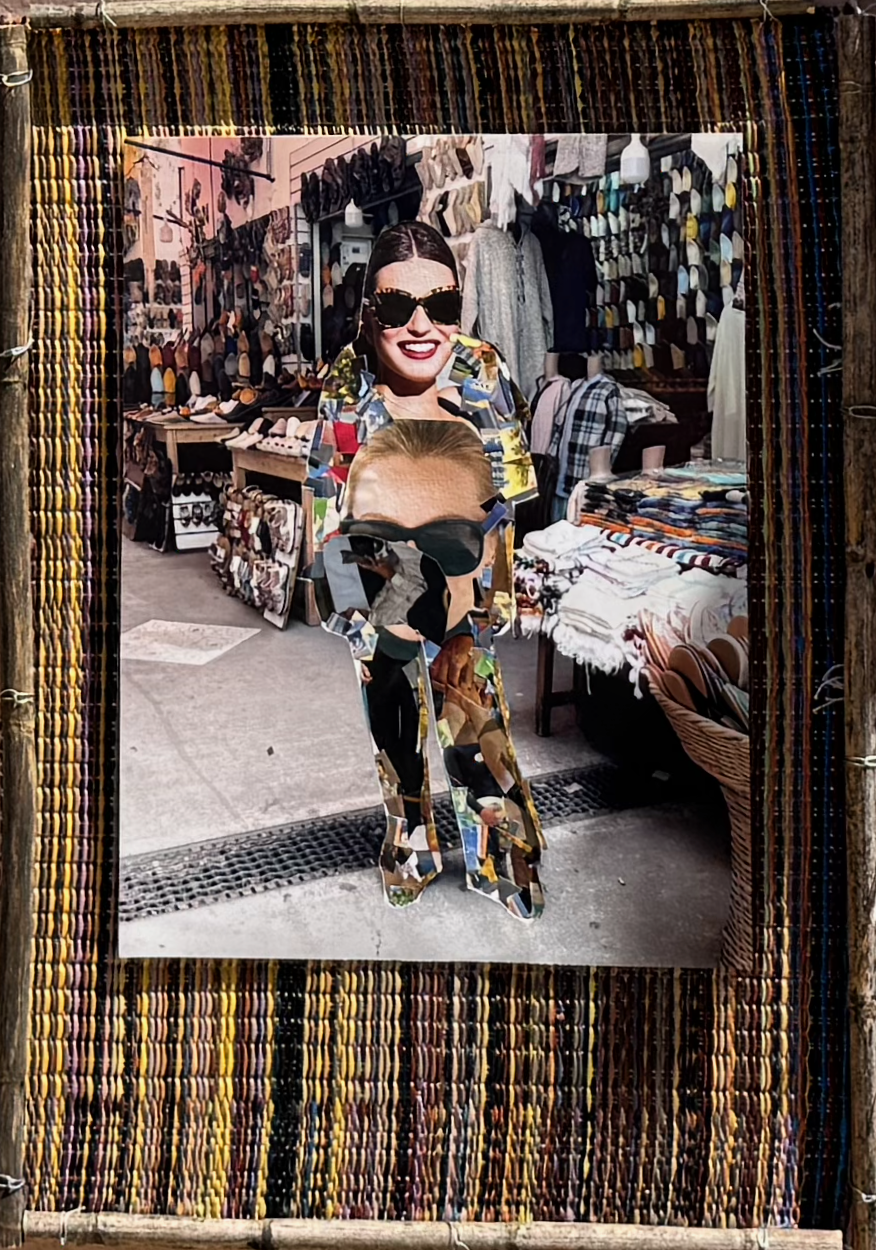
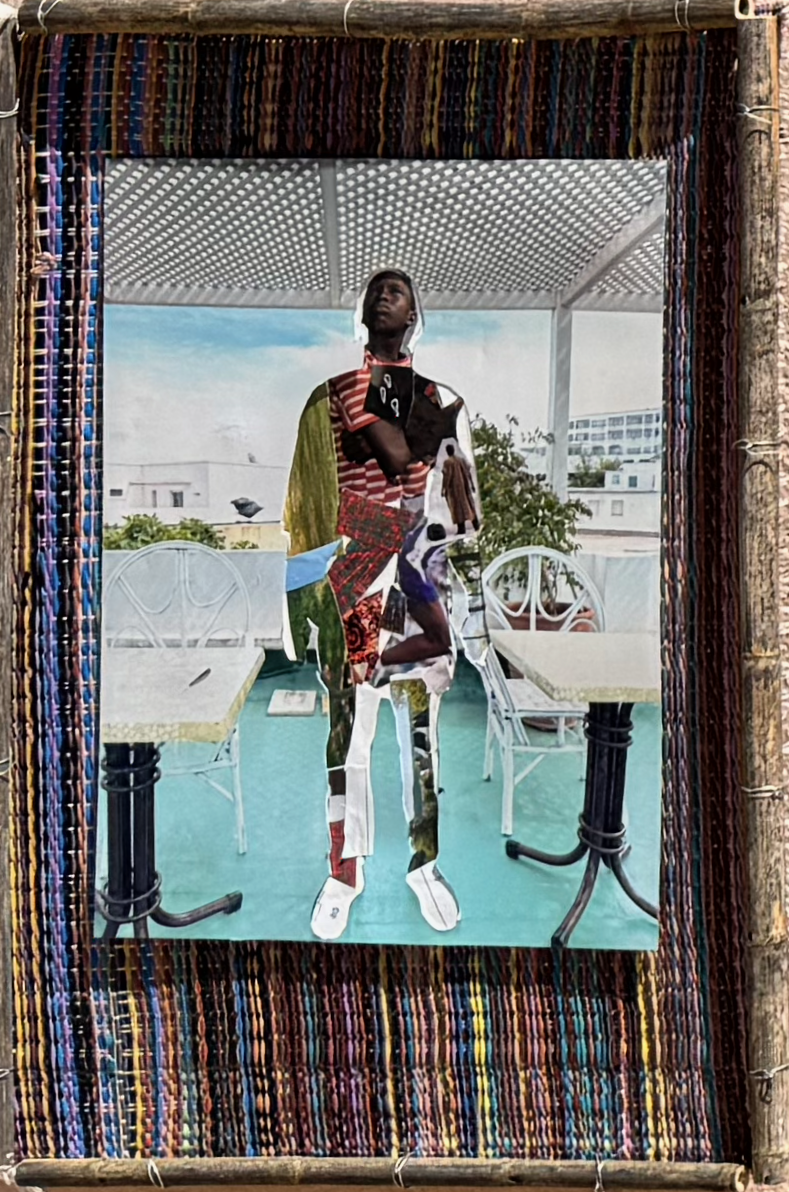
‘We are made of stories - those that have happened, those that are still happening at this moment in time and those that are shaped purely in our imagination through words, dreams and an endless sense of wonder about the world around us and how it works. (…) Not to be able to tell you story, to be silenced and shut out, therefore, is to be dehumanised. It strikes at your very existence; it makes you question your sanity, the validity of your events. It creates a profound, and existential anxiety in us.’ (Elif Shafak, How to Stay Sane in an Age of Division)
Imagine: you’re a 22-year-old woman, who has worked hard to get her degree in marketing and who is looking forward to building a life for herself. Your parents died when you were only 12 years old, but you have a sister you hold dear and both of you were raised by your aunt. You just found your first job when one day, you discover that your aunt has sold you to an old man who says that he is husband. You feel appalled and betrayed, run away and try to hide, but then you realise that in your own country, you can never hide enough. He will keep looking for you. You decide to leave, and the only option you see is to go to a neighbouring country, where a human trafficker can take you to a distant land. You pack your two suitcases and decide to leave everything – everything- behind.
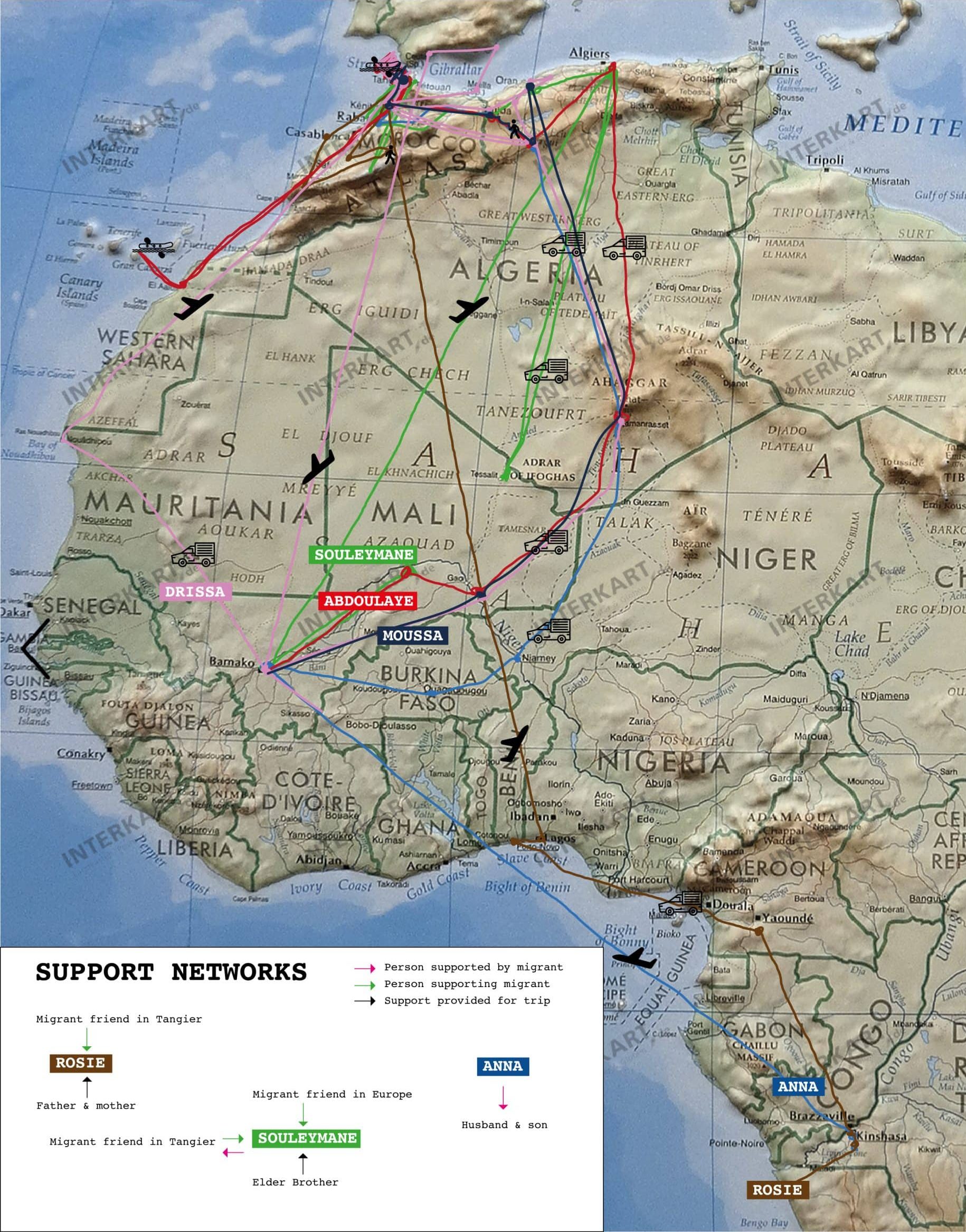
This is one of the stories that were shared with me, when I worked with Sub-Saharan migrants in Tangier, during an artist-residency with the Moroccan NGO Darna from March – May 2026. Together, we traced their journeys, mapped out their financial support networks, recomposed the bags with which they crossed the border into Morocco, and made photo collages.
Undocumented migrants in Morocco live under the continuous threat of being arrested and sent into the desert. Their existence is therefore largely invisible and precarious. The people I worked with acknowledged the importance of being seen and heard. They spoke about their perilous journeys, the many failed attempts to cross into Europe and the feeling that there is no place for them in the world. At the same time, their stories demonstrated courage, humanity, and creativity.
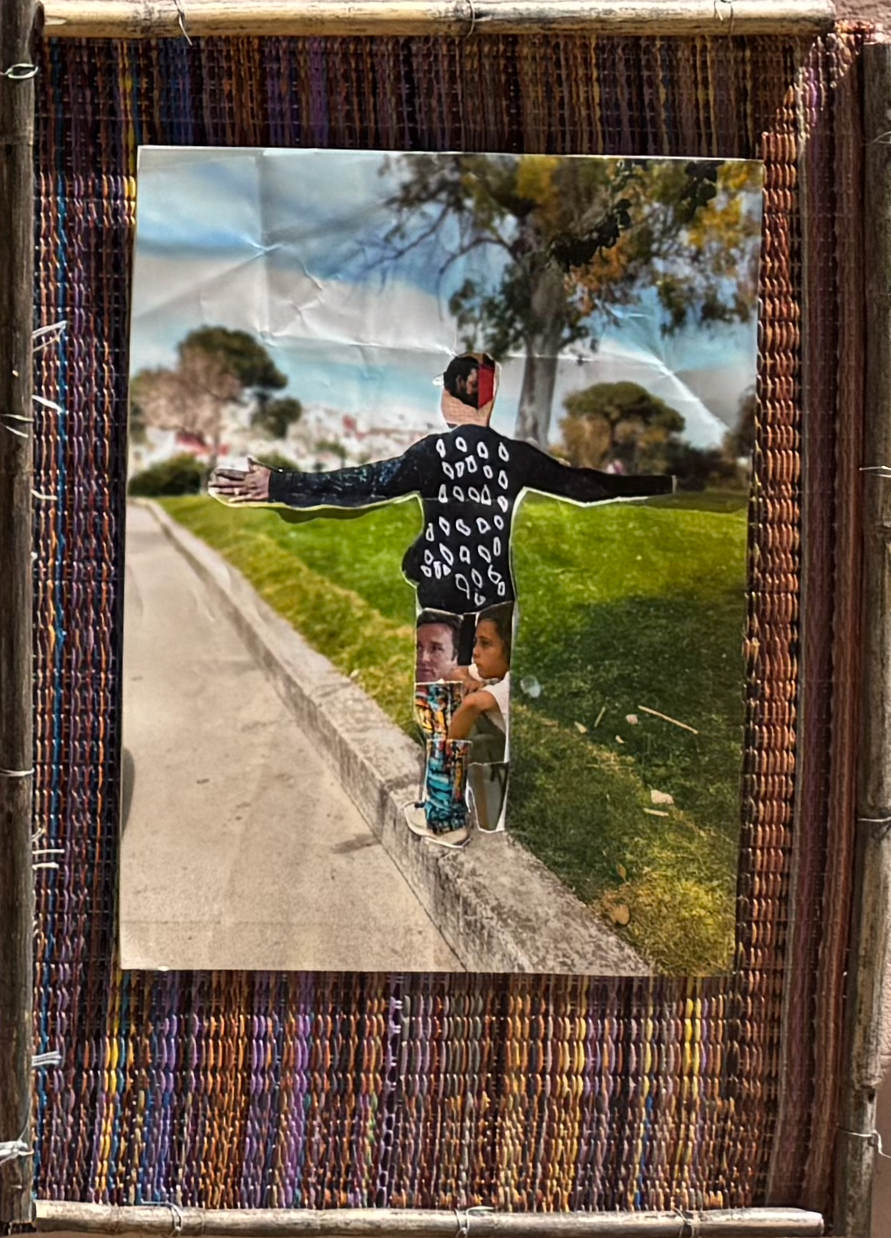
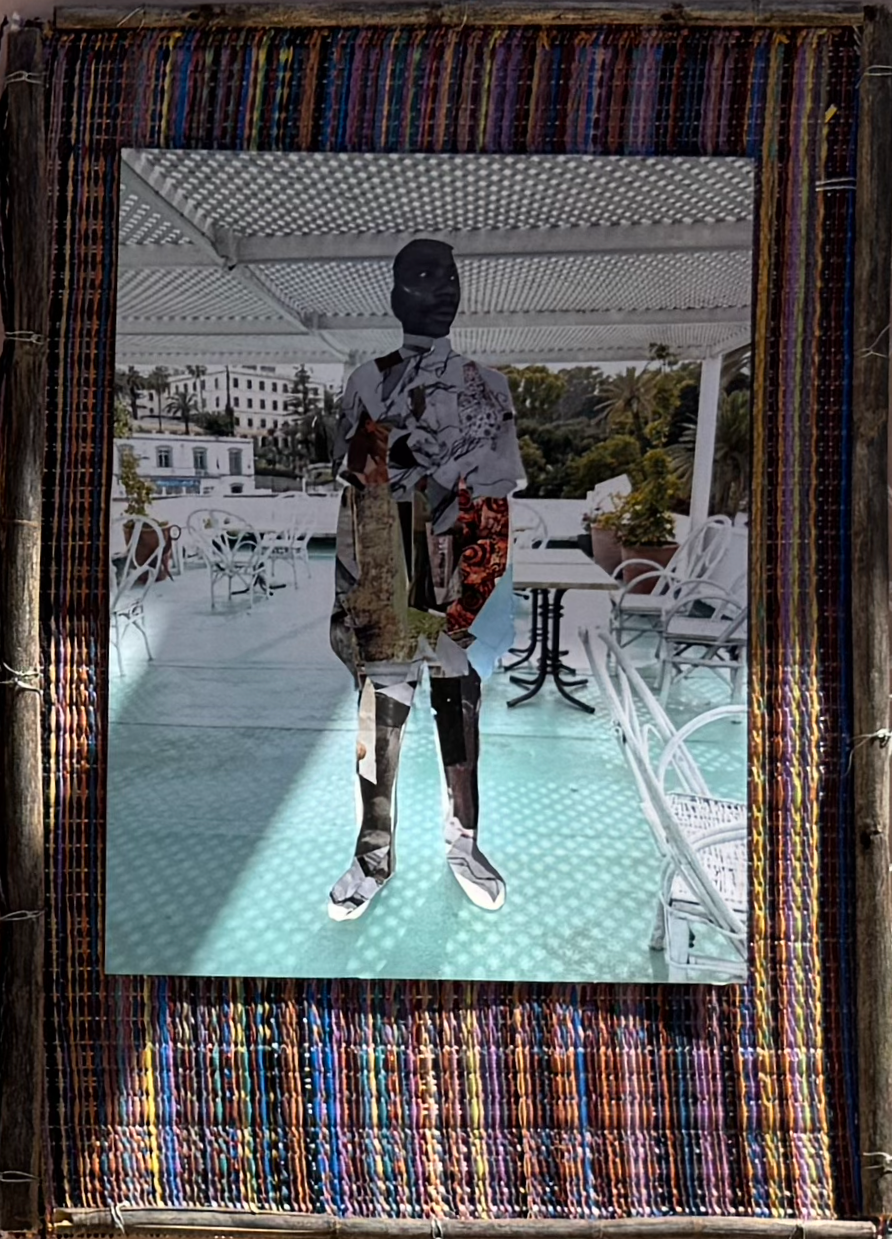
Five persons expressed their feelings in the photo collages shown at the top of the page, made within their cut-out silhouettes, to emphasize how they had to remain unrecognisable. With Anna and Souleymane we recomposed the bags with which they had travelled through the Algerian mountains to Morocco with items from the flea market in Tangier. I exhibited all these items together with recordings of my conversations with them.