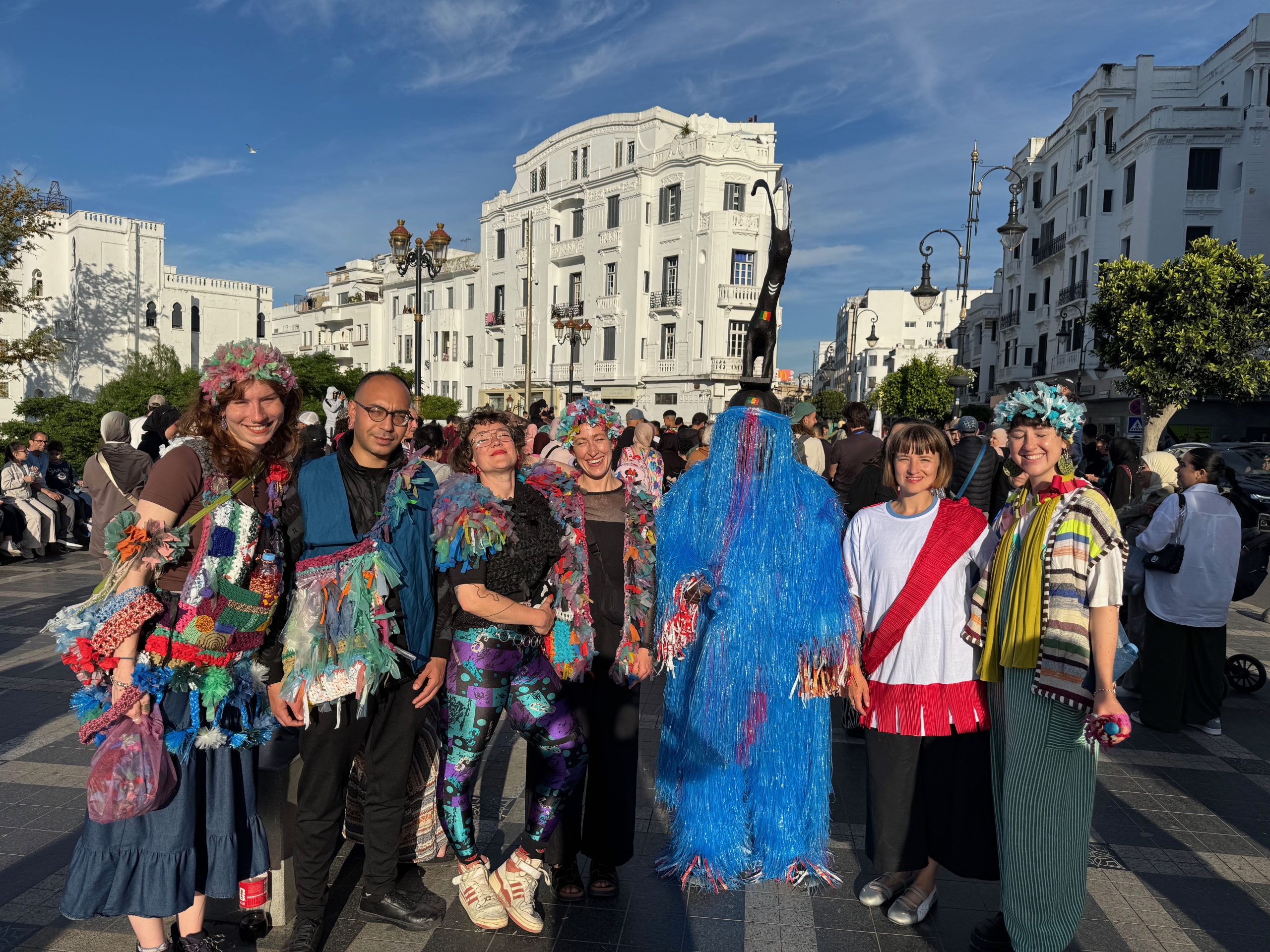
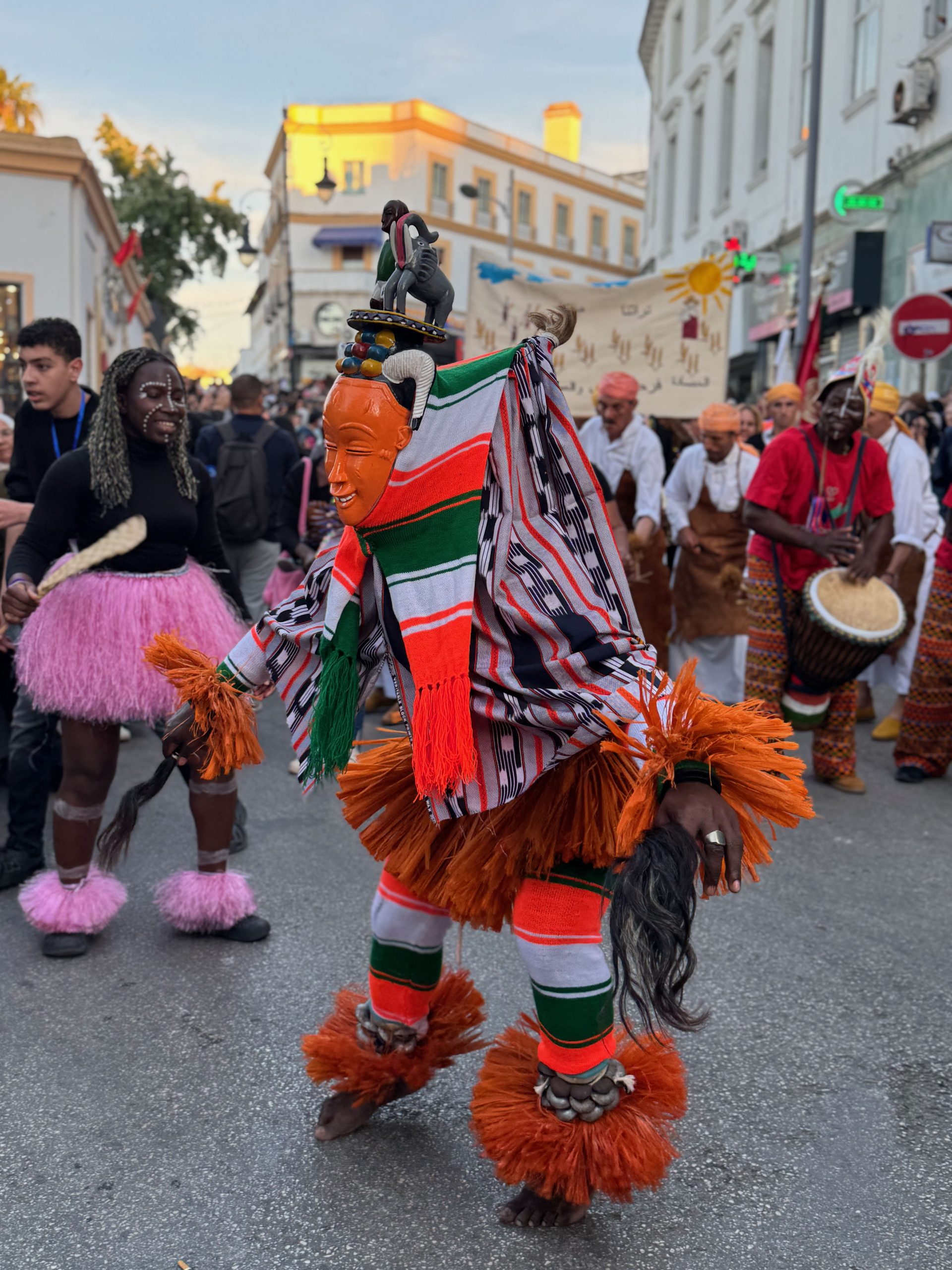
The West-African community in Tangier counts tens of thousands of whom many are undocumented and try to keep out of sight from the police, to not run the risk of being arrested and sent to the desert. To make their presence visible and celebrate their cultural heritage, I created a Malian Ciwara mask from reclaimed materials that was performed during a large public parade organised by Darna.
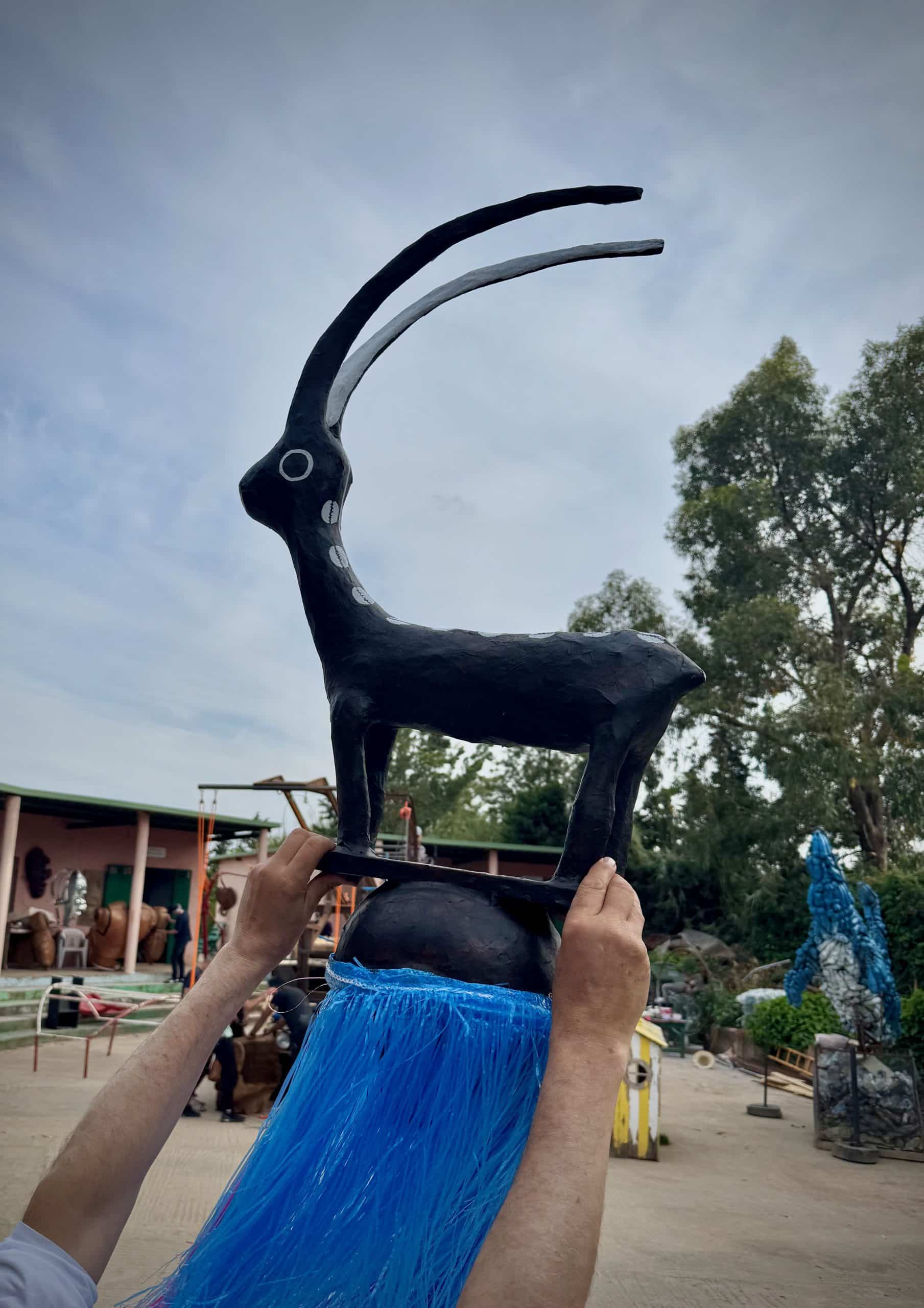
The mask in the shape of a gazelle represents fertility and success. It is used in ceremonies every year at the beginning of the agricultural season, to invoke a good harvest. The person who dances with it impersonates the mask. His face is hidden, which aligns with the invisible presence of this community in Tangier.
Making
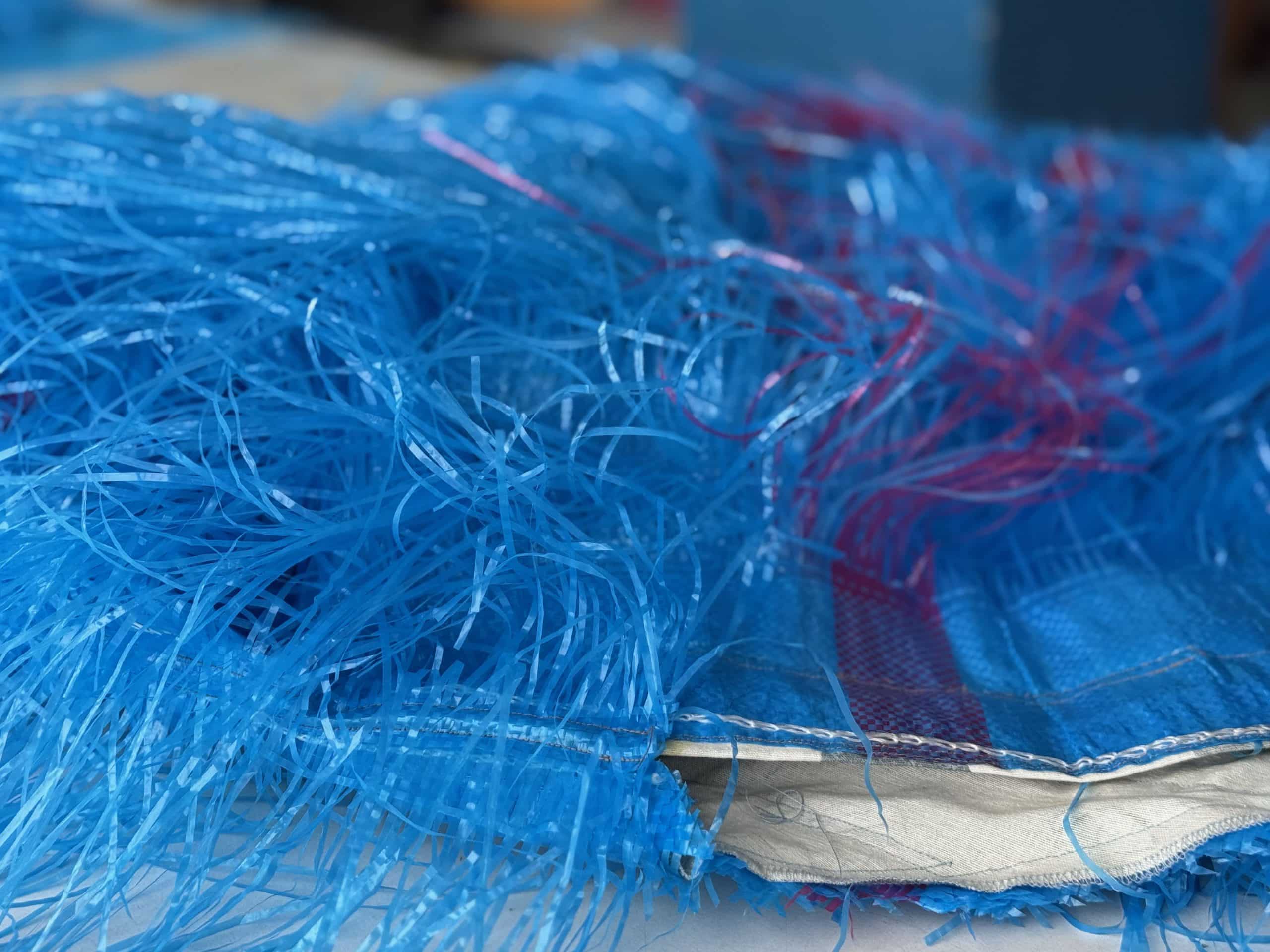
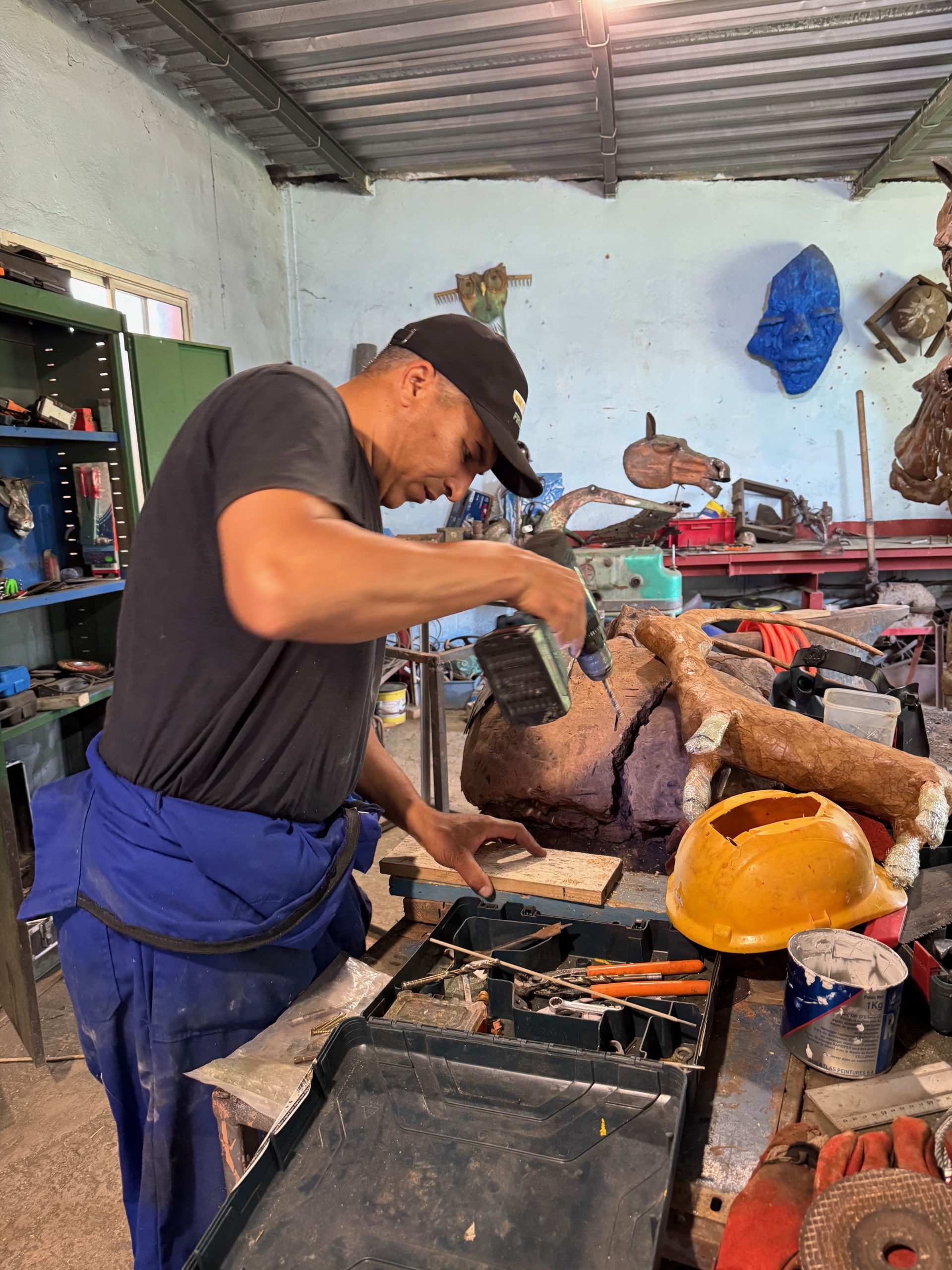
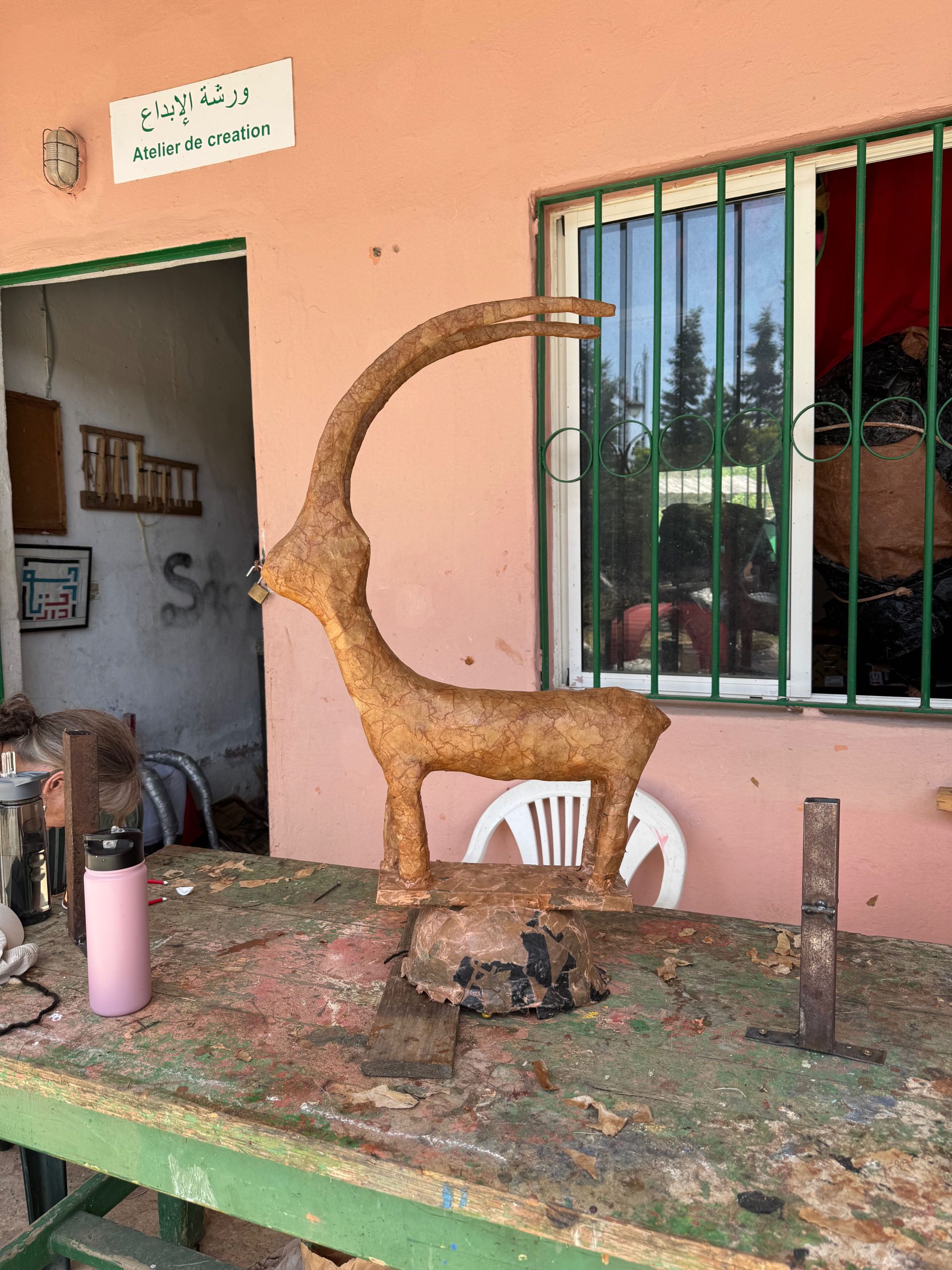
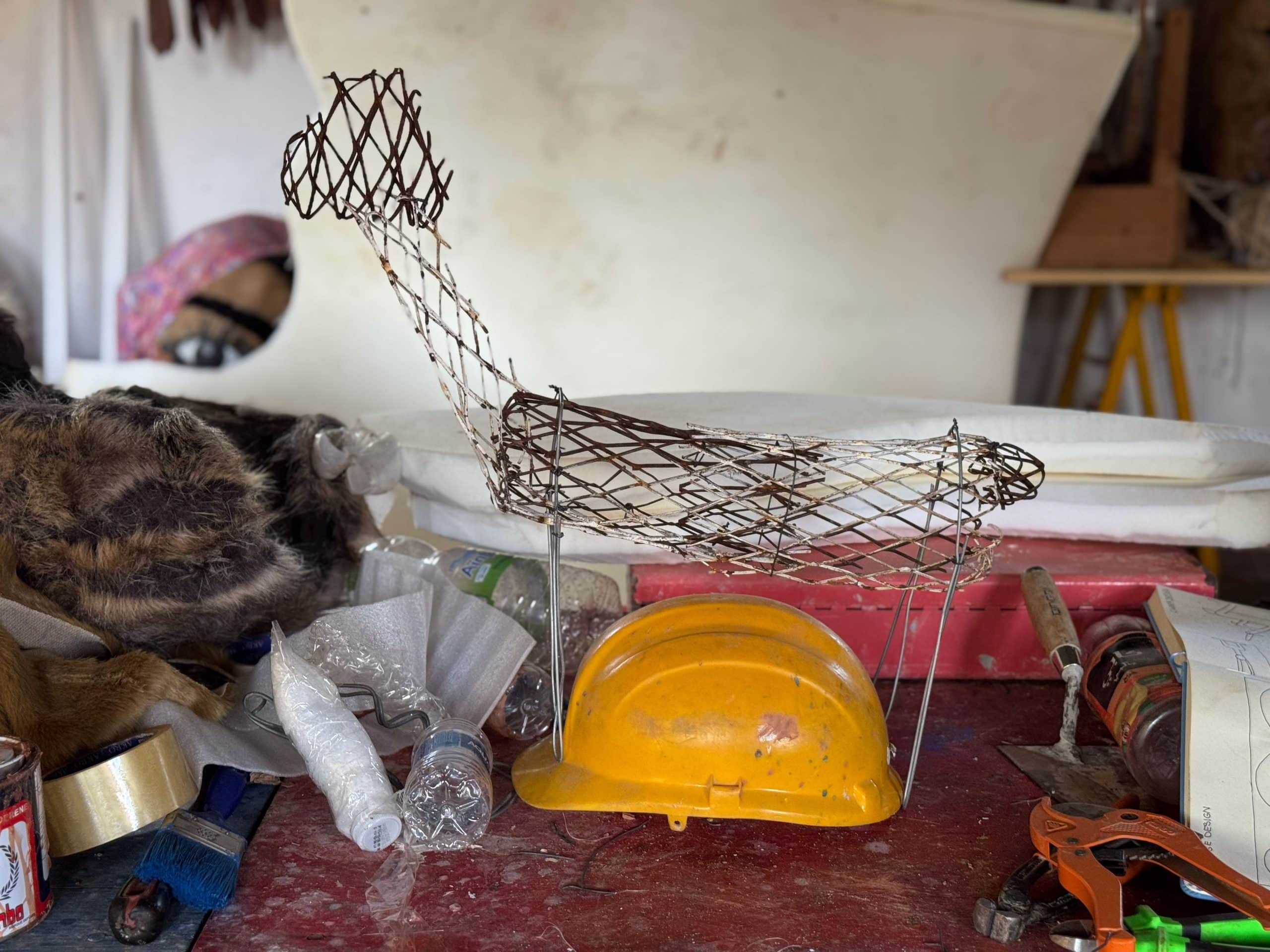
I made the costume from decomposed rice bags sewn onto a cotton base layer. The head piece is traditionally made of dark wood, but I made it out of chicken wire, aluminium foil, tape and papier mâché made of cement bags and wood glue, fixed on top of a construction helmet. It was painted dark brown and decorated with cowry shells, an important symbol in West Africa. Additionally, it has the Malian flag painted on the throat and helmet, upon request by the mask dancer.
Performance
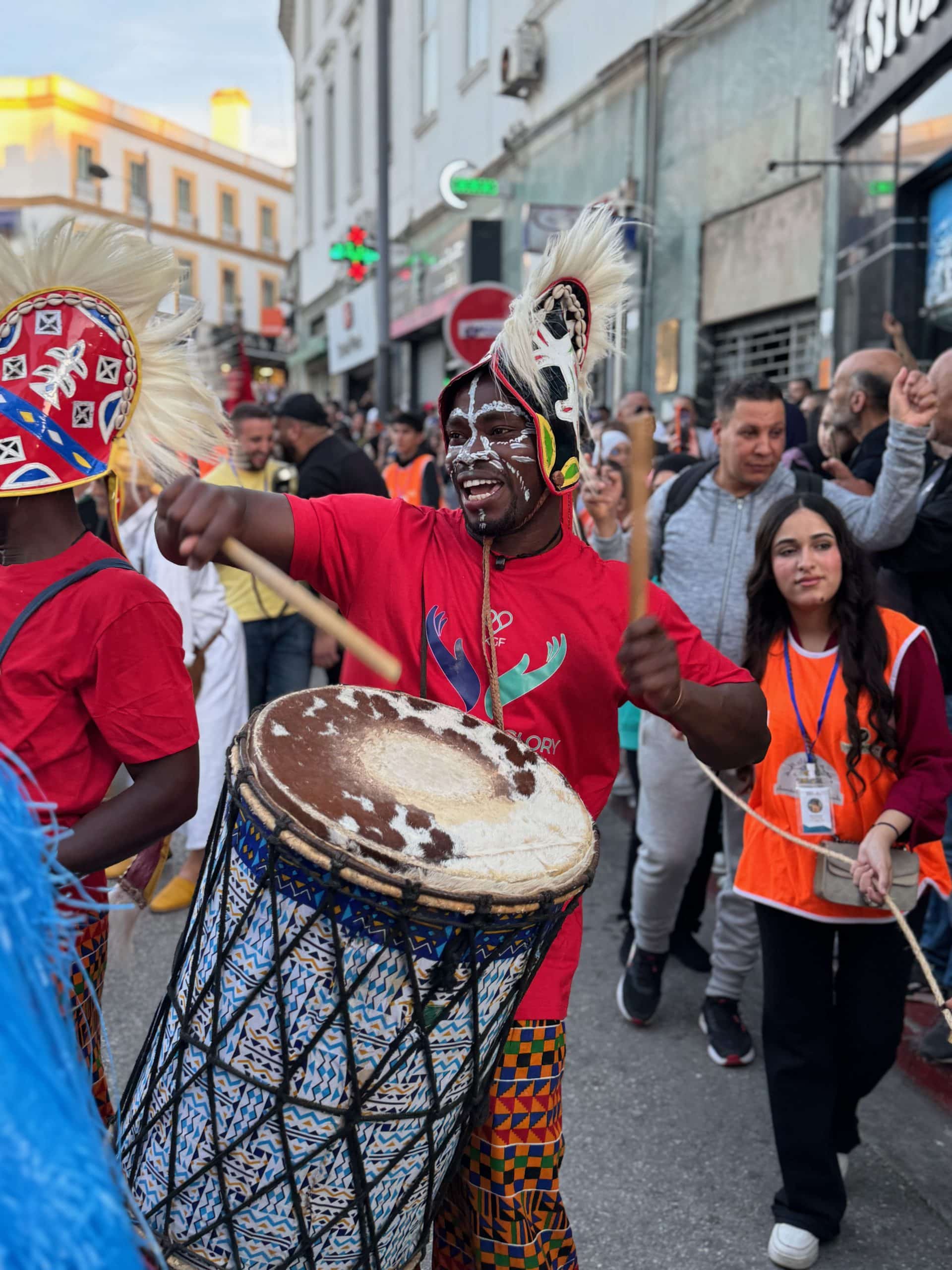
The mask was performed by an initiated member of the Malian community, accompanied by dancers and percussionists of the Miracle Konan group from Côte d'Ivoire. The group has collaborated with Darna for many years, using its premises for rehearsals, but had never taken part in one of its public parades. Their participation marked a new form of collaboration, bringing the cultural traditions of West African communities into Tangier's public space and making their presence visible to a wider audience. At the end of the residency, I donated the mask and costume to Darna so that they can continue to be used in future performances.